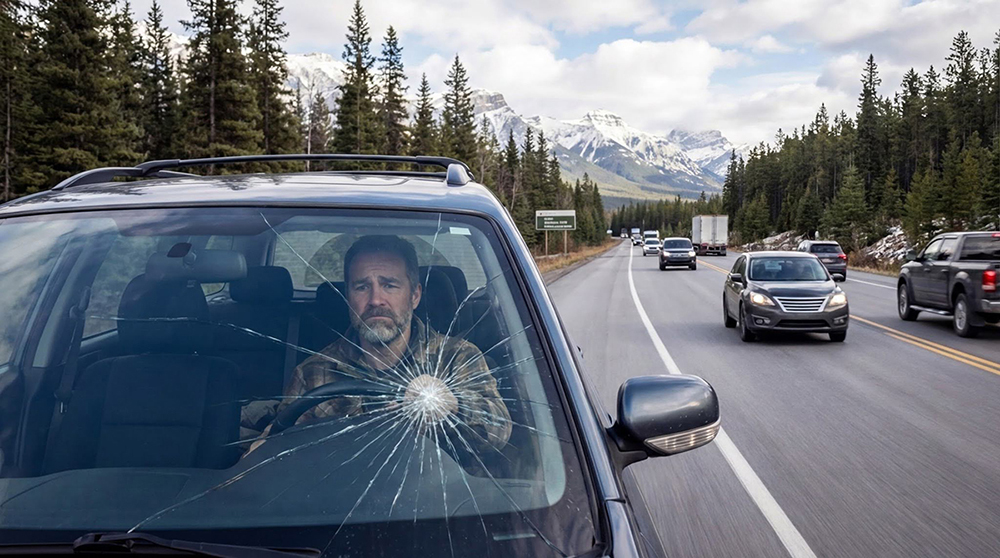
A cracked windshield can become a legal problem in Ontario, but the answer depends on where the damage sits, how large it is, and whether it affects your view. Ontario law does not treat every chip or crack the same. What matters is whether the glass still gives the driver a clear view and whether the vehicle remains safe to operate.
Is It Illegal To Drive With a Cracked Windshield?
Ontario law does not ban every crack automatically. The Highway Traffic Act focuses on whether the windshield and front side windows still give the driver a clear view. Cracks, chips, or delamination can break that standard when they distort sightlines or block what the driver needs to see. The Government of Ontario requirement is simple: drivers must maintain a clear view to the front and side.
Severe damage can also place the vehicle in the “unsafe” category under Section 84 of the Highway Traffic Act. A police officer or Ministry of Transportation inspector may order the vehicle off the road until repairs are completed and the car passes inspection.
Windshield Laws Ontario Drivers Should Know
A vehicle will fail inspection if a crack extends more than 50 mm into the wiper swept area. A star-shaped chip or stone bruise larger than 13 mm in that same area can also lead to failure. Ontario’s inspection standards also treat cracks through both layers of laminated glass as an automatic failure.
| Windshield Issue | Ontario Threshold Or Outcome |
| Crack in wiper swept area | Fails if it extends more than 50 mm |
| Star chip in wiper swept area | Fails if larger than 13 mm |
| Crack through both laminated layers | Automatic failure |
| Damage blocking driver vision | Can violate clear-view rule |
| Severe spider-webbing | Vehicle may be deemed unsafe |
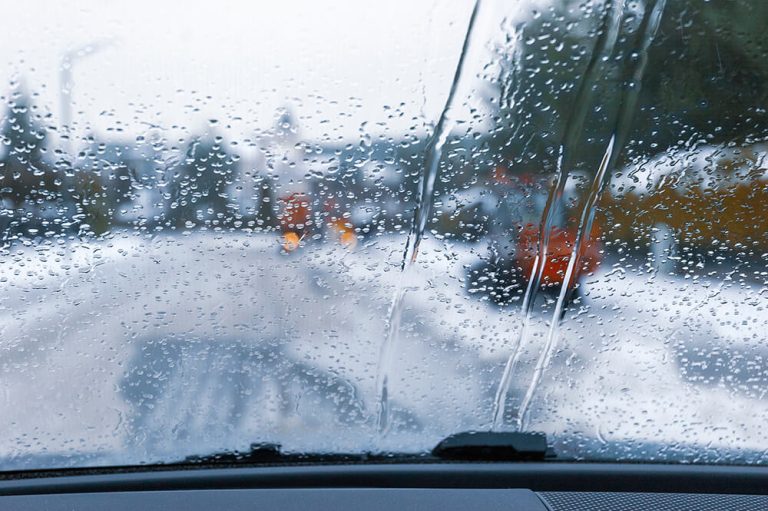
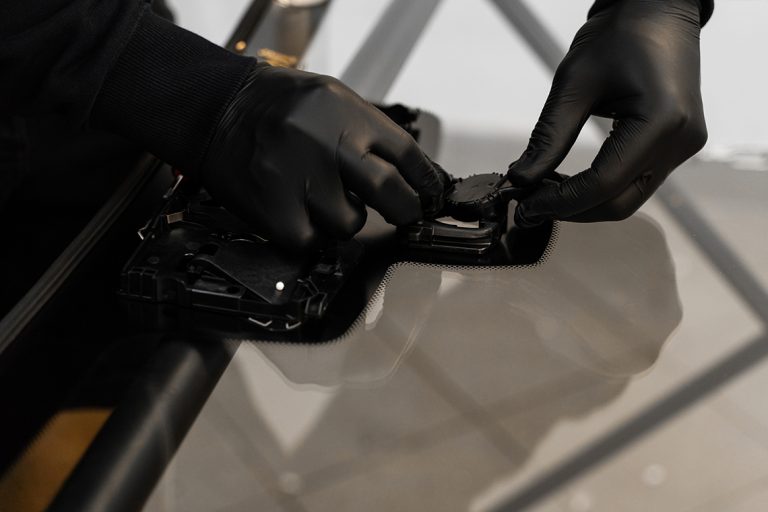
These limits matter because the wiper swept area covers the portion of the glass that most drivers rely on in rain, snow, and slush. Modern vehicles also use camera systems mounted behind the windshield. Newer technologies, such as smart windshields, depend on a clean viewing area without distortion.
Can You Get a Ticket for a Cracked Windshield?
Yes, it can happen. Tickets are typically issued under Section 74(1)(a) of the Highway Traffic Act when the damage interferes with clear visibility.1 A cracked windshield ticket often carries an $85 set fine, a $20 victim fine surcharge, and $5 in court costs, for a total payable amount of $110.
An officer may respond in several ways depending on what they see during a traffic stop:
- Issue a warning
- Provide a notice requiring proof that the windshield was repaired
- Classify the vehicle as unsafe and remove the licence plates until repairs are completed
The last outcome usually occurs when cracks spread across the viewing area or create severe distortion.
Is Driving With a Cracked Windshield Dangerous?
Transport Canada safety research explains that the passenger-side airbag deploys against the windshield before redirecting toward the occupant.2 If the windshield structure is weakened, that support may not function as designed.
Several other safety concerns appear once the glass is damaged:
- The glare from headlights increases when cracks scatter light
- Winter temperature swings can turn a small chip into a long fracture
- Potholes and frame movement place additional stress on damaged glass
Vehicles that also develop windshield leaks may show signs that the seal around the glass has already weakened.
How Long Can I Drive With a Cracked Windshield?
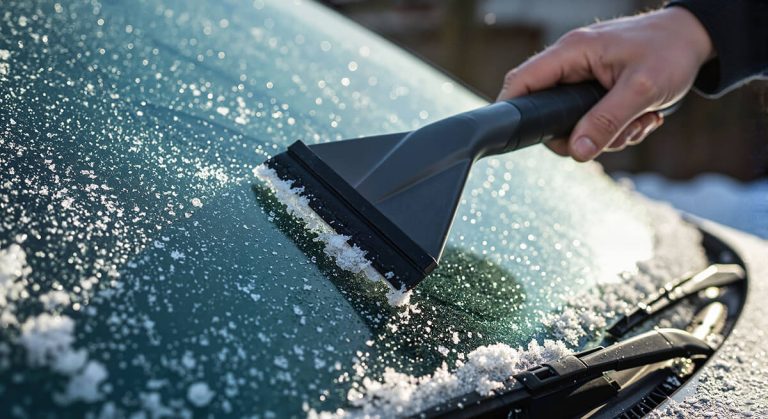
The answer depends on the location and size of the damage, but Ontario winters shorten that timeline. Sudden heating during defrosting can push a small chip into a large crack in seconds. Road salt, vibration, and potholes also increase stress on the glass.
A small chip may still qualify for repair if it sits outside the driver’s direct line of sight and remains away from the edges of the windshield. Once the crack spreads toward the edge or begins affecting cameras and sensors, replacement becomes the safer option.
Is It Safe To Drive With Cracked Windshield Damage During Winter?
Cold weather makes cracks expand quickly. Small chips may appear stable during the day and spread overnight once temperatures drop.
Drivers sometimes take temporary steps to reduce the risk of spreading damage:
- Placing clear tape over a fresh chip to keep dirt and moisture out
- Avoiding sudden temperature changes when defrosting the windshield
- Reducing vibration from slamming doors
- Arranging repair before the vehicle sits overnight in extreme cold
These steps only slow the process. They do not stop a crack from spreading.
Final Thoughts
A cracked windshield may seem minor at first, yet Ontario law focuses heavily on driver visibility and vehicle safety. Damage that spreads into the wiper area, distorts vision, or weakens laminated glass can lead to inspection failures and tickets. Repairing chips early often prevents larger problems later.
How Whitby Auto Glass Can Help
Minor damage may still be repairable when the crack stays outside the viewing area, and the laminated layers remain intact. Larger cracks, edge damage, or sensor interference usually require replacement. Whitby Auto Glass can help drivers review repair options and compare pricing for replacement services.
References
- Highway Traffic Act, R.S.O. 1990, C. H.8 | ontario.ca. www.ontario.ca/laws/statute/90h08.
- Canada, Transport. “How Air Bags Work.” Transport Canada, 10 Dec. 2013, tc.canada.ca/en/road-transportation/publications/air-bag-deactivation/how-air-bags-work.
You May Also Like