A cracked pinchweld, a rushed cure, or a storm rolling in an hour after installation can turn a routine windshield replacement into a structural gamble. Data compiled by the Auto Glass Safety Council shows a properly bonded windshield supplies up to 45% of a vehicle cabin’s structural integrity in a frontal collision and as much as 60% of the support needed to survive a rollover.1 That figure explains the hesitation many drivers feel before pulling out of the auto glass shop‘s lot under gathering clouds. Rain after windshield replacement worries most owners for one simple reason.
Can Rain Get Through a Cracked Windshield
A windshield that has fully cured does not let water in through its face. The polyurethane bead forms a continuous seal against the pinchweld, and once that seal skins over, liquid sitting on the glass has no path inward. The real vulnerability sits at the edges, not the middle of the pane. If the glass already carries a crack, or a previous repair left a gap in the trim, water can travel along that line toward the frame and settle where it shouldn’t.
Can rain get through a cracked windshield in that scenario? Given enough time and the right angle of impact, yes, moisture can migrate through a compromised crack and reach the cabin or the adhesive line beneath it. That’s a separate problem from a fresh, correctly bonded installation, and it’s part of the reasoning behind advice against driving around with a cracked windshield rather than waiting for it to fail on its own schedule.
Can You Drive in Rain After Windshield Replacement
Every adhesive carries a minimum drive-away time, the point at which it has built enough strength to hold the glass during a collision. That number comes from testing under FMVSS 212 and its Canadian counterpart, CMVSS 212, which measure whether a windshield can resist the outward push of a deployed airbag. Fast curing urethanes can reach that strength in thirty minutes. Standard one-component formulas, especially applied in cold weather, sometimes need close to three hours.
| Adhesive Type | Typical Minimum Drive Away Time |
| High Speed Accelerated Polyurethane | 30 minutes |
| Accelerated Dual Component System | 60 minutes |
| Standard One Component Urethane | Up to 3 hours |
| Sub-Zero Formulated Urethane | 1 hour in freezing conditions |
Once that window passes, can you drive in rain after windshield replacement without added risk? Research compiled through the National Highway Traffic Safety Administration points to the real hazard elsewhere. Wet roads, reduced tire traction, and diminished visibility raise crash risk no matter when the glass went in, so the caution that counts most involves speed and space, not the bond.2
Can You Replace a Windshield in the Rain
Installation differs from driving afterward. Can you replace a windshield in the rain and still expect a dry bay result? Not reliably. Standards from the Auto Glass Safety Council call for the work to happen inside a clean, enclosed space, for concrete reasons.
- Moisture on the pinchweld stops primer from bonding to bare metal, leaving a gap the adhesive can never fill later.
- Pre-treatment chemicals left open to rain lose their ability to promote adhesion within minutes.
- A stray puddle trapped under the bead creates a void that shows up later as a leak or a rattle.
A technician who sets up in an open driveway during a downpour is taking a shortcut the glass will eventually expose.
Can a New Windshield Get Rained On
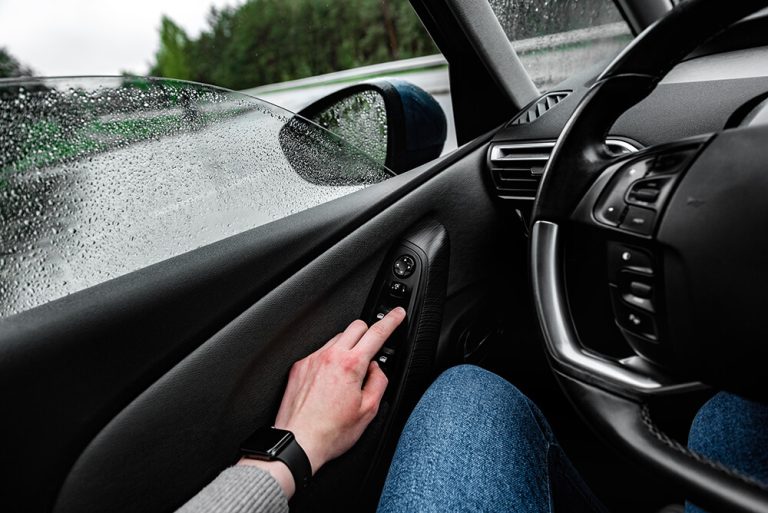
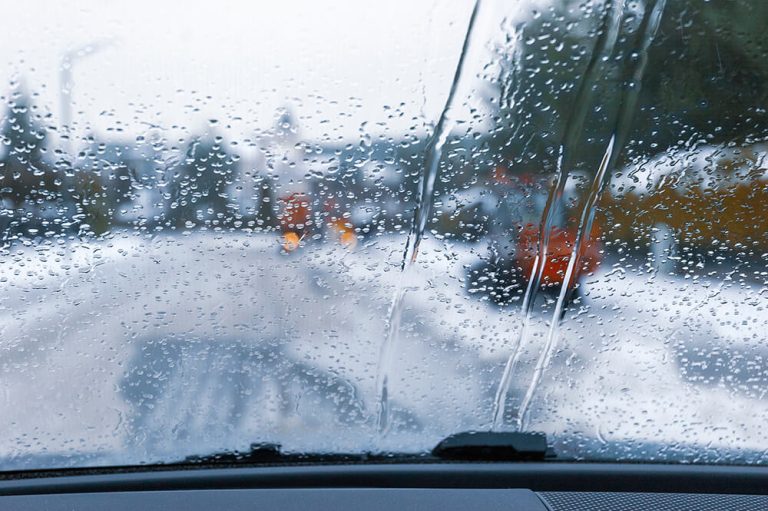
Once the glass is set and skinned over, ambient weather stops threatening the chemistry underneath. Can a new windshield get rained on the same afternoon it goes in? In light or moderate rain, yes, because raindrops hit the glass at a gentle terminal velocity and simply run off the cured surface. What the adhesive can’t tolerate yet is concentrated force.
- Automatic car washes and pressure washers generate water pressure well above a thousand pounds per square inch, enough to push past fresh moulding and disturb an uncured bead.
- Aggressive detergents and hot wax treatments can soften the outer skin before it has fully hardened.
- High-powered air dryers create pressure swings across the cabin that can nudge a windshield that hasn’t reached full strength.
Most manufacturers and installers ask owners to hold off on any of those for 24 to 48 hours, a shorter window than the old advice about waiting a full day just to drive.
Can I Use My Wipers After Windshield Replacement
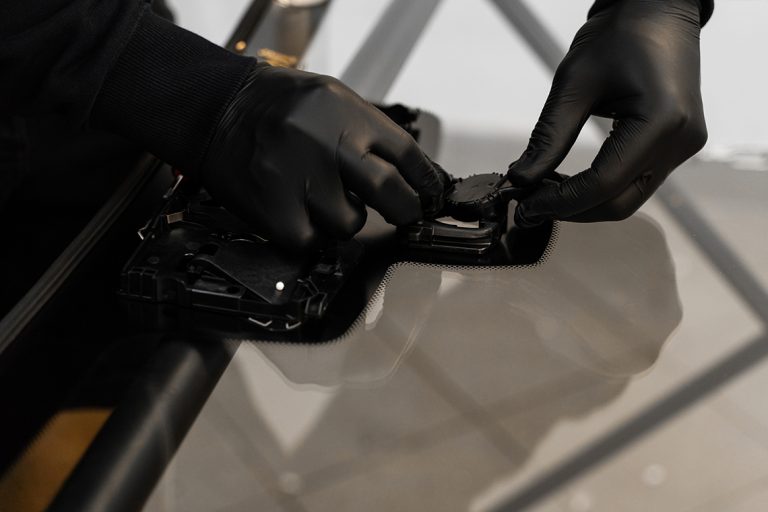
Wiper blades add friction with every sweep, and at highway speed that friction becomes measurable force. Can I use my wipers after windshield replacement before the adhesive fully sets? Better to wait until the shop confirms the drive-away time. Drag on an uncured bead can nudge the glass out of its resting position by a fraction of a millimetre, enough to throw off a camera mounted just behind it. Modern smart windshields carry forward-facing cameras, rain sensors, and radar behind the glass, and each of those components depends on the pane sitting exactly where the manufacturer intended.
Once the bond cures, wiper drag on the glass becomes negligible, though a separate weather issue can still linger. Heavy rain can interrupt the dynamic calibration drive some shops use to align that camera, since the system needs clean lane markings to read. A static calibration done indoors sidesteps that problem.
What to Put on Windshield for Rain
Owners often wonder what to put on the windshield for rain to improve visibility right after a replacement, usually thinking of rain repellent coatings or hydrophobic sprays. Hold off near the camera housing. A film applied unevenly across that zone can scatter light or create glare that confuses the sensors the coating was meant to help you see through. If a hydrophobic treatment appeals to you, ask the installer when the camera zone can safely be treated, then apply it well clear of that area everywhere else. Beyond that, plain wiper fluid and a fresh set of blades do more for wet weather visibility than any specialty product applied too soon.
A newly replaced windshield handles rain the way it’s supposed to once the bond has set, and the only real caution belongs to the hours before that point and to anything with more force than a raindrop.
If you’re weighing the cost of a replacement or just want a straight answer on timing for your vehicle, get a quote from our team today.
References
- SafeWindshields.org. (2024, July 23). Home page – SafeWindshields.org. https://safewindshields.agsc.org/
- Klauer, Sheila G., et al. The Impact of Driver Inattention on Near-Crash/Crash Risk: An Analysis Using the 100-Car Naturalistic Driving Study Data. National Highway Traffic Safety Administration, Apr. 2006, DOT HS 810 594.
You May Also Like